
What Is a Good Thread Count for Sheets? A Guide to Linen, Percale, and the Best Sheets for Hot Sleepers
Table of Content
Thread Count Isn’t Everything
A guide to linen, percale, and how to choose the bedding that actually suits you.
QUICK READ
The key points if you're short on time:
- GSM (grams per square meter) tells you more about bedding quality than thread count alone.
- Our linen-cotton blend at 270 GSM is warm, textured, and designed to improve with every wash.
- Our cotton percale duvet cover at 125 GSM and 200 thread count is the better choice for warm sleepers.
- Both are made from natural fibers: biodegradable, non-toxic dye, no microplastics.
Thread count is the number the bedding industry has trained us to ask for. The problem is, it only tells part of the story. Ask any experienced interior designer what separates good bedding from forgettable bedding and they will tell you the same thing: fabric, weight, and weave.

The Number Worth Knowing: GSM
GSM stands for grams per square meter: a direct measure of fabric weight. It tells you how a textile will feel, drape, and perform. Thread count is one data point. GSM gives you the full picture.
|
GSM Range |
Weight |
Best For |
|
100–150 GSM |
Light |
Warm sleepers and warmer climates. Our Cotton Percale sits at 125 GSM |
|
150–220 GSM |
Balanced |
Year-round comfort with a soft, comfortable hand feel. |
|
220+ GSM |
Substantial |
Luxurious drape and presence. Our Heavy Linen Bedding is woven at 270 GSM. |
So what is a good thread count for sheets, honestly. For percale, 200 to 400 is the working range. For sateen, 300 to 600. Anything above 600 is usually multi-ply yarn counted twice. A well-made 200 thread count percale in long-staple cotton will outperform an 1,800 thread count sheet built from short, weak fibers, every night of the week.

Linen: The Fabric That Gets Better Every Time You Wash It
Our linen coverlet is woven at 270 GSM. That weight is deliberate: substantial in drape, warm without being stifling, and built to last. The blend of 58% linen and 42% cotton gives it the relaxed texture linen is known for, with enough structure to hold its shape on a made bed.
Linen pillowcases have been a staple in European interiors for good reason. The fiber breathes naturally, softens with washing, and develops a lived-in quality over time. This is not bedding you will replace in three years.
The linen coverlet does not need extra styling to look finished.


Available in Indigo and Soft White. Pairs easily with printed or solid sheeting. The coordinating lumbar finishes a made bed without additional styling.
Specs: Linen 58% / Cotton 42% / 270 GSM. Prewashed. Dyed with eco-friendly, non-toxic processes. Biodegradable, no microplastics.
Percale: The Right Choice for Warm Sleepers
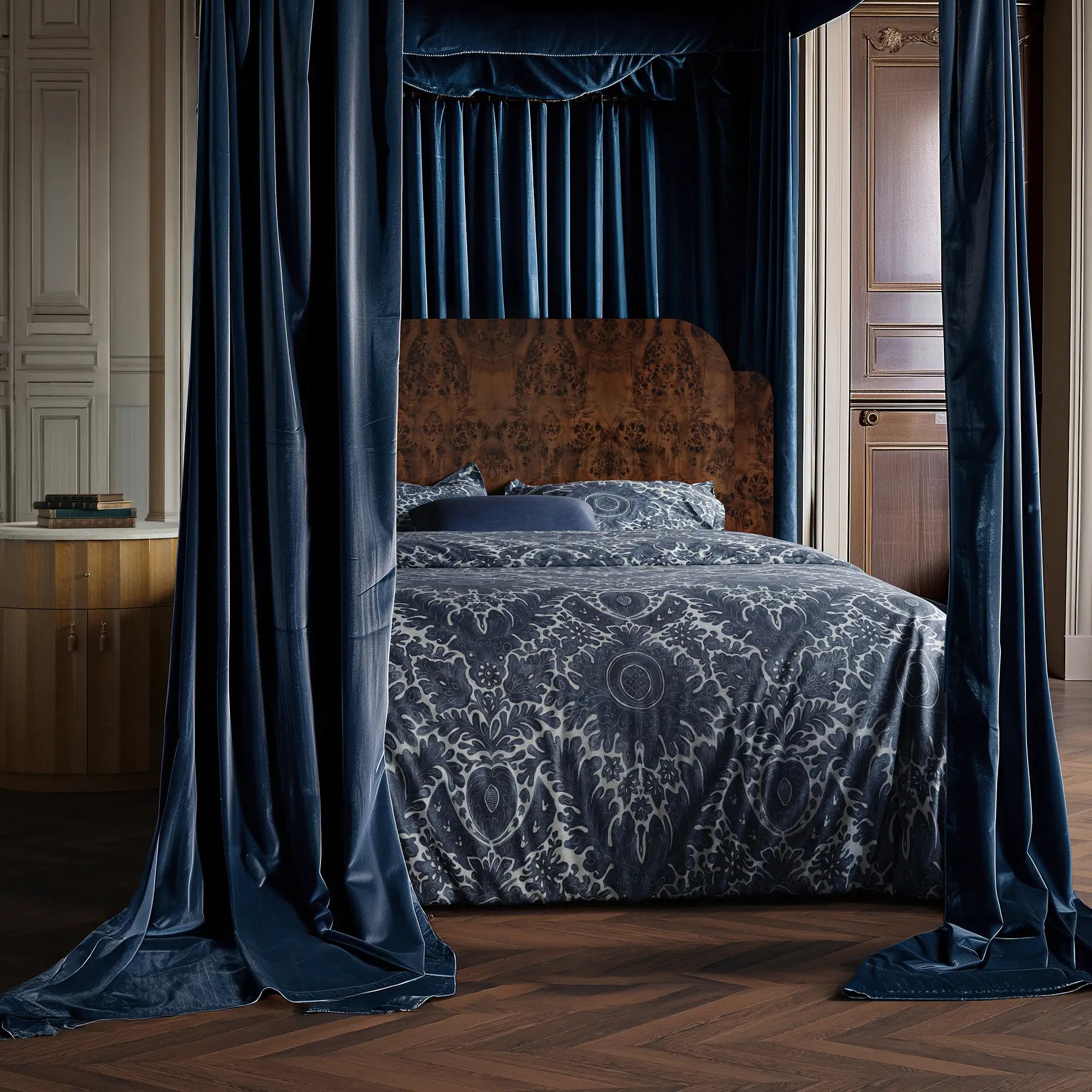
Cotton percale is light, crisp, and cool to the touch. It is the weave most designers reach for when a client runs warm, and the one we chose for our printed duvet covers and shams.
Our Printed Cotton Percale Bedding is woven at 125 GSM and 200 thread count. Percale’s one-over-one-under weave creates a matte finish that breathes better than sateen, resists pilling, and softens with every wash without losing its structure.
For anyone asking what is a good thread count for sheets: 200 thread count in a quality percale outperforms sateen at twice that count for most sleepers. The weave matters more than the number.
Cool, crisp, and breathable. Percale is the preferred choice for warm sleepers and warmer climates.


Available in: French Flammé Stripe, Toile de Rouen, and Provençal Scenic Landscape. Each references European textile heritage and looks collected rather than themed.
Specs: 100% Cotton Percale / 200 Thread Count / 125 GSM. Non-toxic dye. Biodegradable. No microplastics.
Why Natural Fibers Make a Difference
Natural fibers breathe, regulate temperature, and do not shed microplastics when washed. They are biodegradable. They do not trap synthetic odors over time. For clients who want to know what goes into their homes, this is a straightforward answer.
Our bedding is dyed using eco-friendly processes free of harmful substances. Natural fibers are among the most beautiful and most responsible materials available. For us, that is the starting point.
How to Care for Your Bedding


Natural fibers are simple to care for. A few consistent habits are all they need.
Machine wash on a gentle cycle with similar colors
Cold or warm water only, never above 104°F
Mild detergent, free of softeners and bleach
Tumble dry on low, or hang dry away from direct sunlight
Store fully dry in a breathable space
Both the linen-cotton coverlet and the cotton percale duvet covers soften with every wash. The fabric improves with use.
The Takeaway
Linen for warmth, texture, and longevity. Percale for cool, crisp comfort. Both made from natural fibers, designed to improve with washing, and available now.
Recent Edits